
The self-help predators.

Read time – 05:00 Minutes

Coach Abhi’s disclaimer : The content written in this blog post is only for general information purpose, and not to be taken as medical advise. The reader is expected to use his or her common sense before using any of this information. I disclaim all responsiblity for any liability, loss or risk, which is incurred as a consequence of the use and application of any of the contents of this blog post.

Special disclaimer : there are legitimate means to improve oneself by taking and implementing advise from experts on productivity, leadership, personal development, successful career, relationships, wealth and other allied subjects. I am writing this blog post not to dismiss such legitimate advise or the contributions of any expert. The intention of this post is to create an awareness of the increasing number of pseudo-experts or gurus who capitalize on selling false hopes on the pretext of providing self-help. The reader can get useful information on finding the characteristics of such shady self-help courses/messiahs so that they can probably save their wallets and time or rescue their close friends who have inadvertently fallen prey to such a toxic culture of self-help. I am not accusing any one particular individual or any institution or any self-help guru or generalize the world of self-help as a hoax.

There are many genuine experts, professionals, writers, speakers, coaches and public figures who have shaped the personalities of highly successful individuals. I can vouch for some of the gurus who have shaped me to be the man I am today! I have been heavily influenced by the concept of dharma (duties), satya (truth), karma (action), and other aspects deriving from our yoga philosophy and our mythology, and the non indigenous concepts from Zen to Stoicism. Be it, Commander Mark Divine’s books, talks and materials which was one of my earliest self-help resources (non indigenous) – life advise coming from a former Navy Seal! I have sought self-help from Ryan Holiday, Tim Ferriss, Susan Cain, Daniel Goleman, Jordan Peterson, Nassim Nicolas Taleb, Eckhart Tolle, and the like from their life’s work. I consider myself lucky to have found the right resources at the right point of time, and I could not have asked for better resources over the last decade. These figures have shaped my way of life and thinking. These are a few examples of real or authentic gurus who are genuine in their content and have the right intentions for their readers or followers. But it is the mushrooming of gurus and their courses, e-books, materials most of which are just a copy-paste from the handbook of “How to become a money making GURU?”

The pandemic and the resulting lock-down has driven the self-help industry on a frenzy! Don’t be surprised if you are bombarded with social media advertisements of “gurus” (of all possible avatars) speaking multiple languages with subtitles prescribing remedies to all your problems. What’s wrong! Of course that’s their job, isn’t it? Are they not doing a good deed by spreading positivity! Can’t we appreciate their time and effort that they take to preach the meaning of life, pursuit of happiness and finding hope? The answer is not as easy as it may seem or the truth may be a lot harder to digest. There are two parts to this business of self-help, while one is about the model of selling false hopes and dreams to the gullible, the other is about making more of such pseudo-experts or pseudo-gurus in from of courses. Don’t you know in less than twenty four hours one can be a counselor, a life coach or even a “guru”!

What concerns me is the fact that the only person seemingly making a big progress, money and success is the “guru” or the icon himself, but not his followers or his fans (cult). This is a business after all, a business where hopes are sold! It has now become the new digital bandwagon, (for some entrepreneurs and the like) with ready templates, and sophisticated marketing tools that can find the perfect market (prey) for their services (false hopes!). And there is a big market out there (of people without a hope), with ever rising mental health issues, suicide rates, substance abuse and unemployment (recession) the world can be an unforgiving place for many who seek an escape route, or a means to get a better life or just a hope! These are the people who fall prey to the inspiring words, quotes or the video bytes which are carefully designed to get their attention.

There is a bait! Most of these toxic self-help courses or pseudo-experts promise big hopes using baits like – financial freedom (making big money), shortcut to fame/stardom, skipping a 9 to 5 job, elitist lifestyle, pursuit of one’s passion, being part of an exclusive cult, extraordinary competency in little time, happy relationships and the like. Having to improve one’s life is often an intuitive choice of many young adults so they turn to the world of self-help. But choosing the right content can be challenge! I believe that one must ask oneself some important questions or think on these lines critically before subscribing to or buying any self-help resources-

  • Did the title overtly or covertly have the typical bait to prompt an impulsive reaction from a prospective consumer like promise of wealth and happiness – or does the course offer an irrational promise of changing one’s life into a fairy-tale by using (buying) their materials
  • Empathetic stance – the origins of the course or the philosophy tracing back to an inspiring story of transformation which often starts with a victim narrative leading to an epitome of success
  • Fabricated video content – large collection of video bytes with motivating videos with powerful visuals and music (most of it predictable in their outcome) using resources from other experts without any credits or acknowledgement to the source – lack of authenticity can be spotted
  • Evidence of credibility – check if the resources or the “guru” has any credible qualifications or work experience or any real ‘skin in the game’ (books under reputed publications or featured on government/federal institutions)
  • Fabricated testimonials – cross check on the testimonials or excessive top rated reviews while paying attention to the average reviews.
  • A ladder structure (note that a legitimate resource may have such a structure but without any irrational outcome/results) – a free e-book leading to courses often demanding subscription fees, one course unlocking another, secret or bonus materials, retreats and getaways (parties) dressed up as life changing events and exclusive memberships (being part of the cult)

Although the core content of any resource cannot be judged right away but a glimpse of the introductory materials, the samples will shed enough light on redundancy of ideas or content being repeated passively, or presented in different tones with unnecessary explanations. The course may not have any tangible yardstick to measure the effectiveness of the course or the progress expected, or a action-plan to objectively take step by step action. It is virtually impossible for the average consumer to even understand the fact that he was entrapped or that he is just a means to make someone else rich. These counterfeit self-help courses are carefully constructed with a win-lose outcome where the consumer (seeker of hope) is made to accept the fact that he did not try hard enough or he did not do his homework! But the winner is always the guru (the mastermind who sells hope).

All these may sound familiar once you start to pay attention. Take a close look for yourself and carefully analyse the scripted talks, and the self-help e-book click baits and other “free” resources which are apparently worth thousands of dollars which are given out (for “free) just for an exchange of your email! Dig further and you will discover retreats, getaways that are going to put the consumer (hope-less person) into further debts (hopelessness) they cannot come out of. So much for self-help or self-destruction! Little do the consumers realise that the false sense of security created temporarily, the false confidence or the feeling of belongingness that compensates for the lack of any real progress or development. Self-help is not easy, as it takes a particular course of time of one’s development facing the ups and downs of life to learn from experiences. It is not a mistake to be striving to be the best, or seek to improve one’s life but it is important to know that there is no such thing as a perfect life. It is not necessary to be a millionaire to be happy, or to be an expert to make a living, or one’s life’s need not be always be in a state of good health, free of stresses, financial stability, and happy relationships. But to embrace all of it, facing adversities, and overcoming them!

The truth is – there are profiteers of selling hopes. Don’t be a prey!

Quote to ponder over – “A stoic is someone who transforms fear into prudence, pain into transformation, mistakes into initiation, and desire into undertaking.” – Nassim Nicholas Taleb
Coach Abhi is a ‘Strength Coach’ holding a Master of Physical Education and Sports Sciences (M.P.Ed NET) with a meritorious national level competency in his academic discipline. His content comes from coaching/training/learning experience of 10000 plus hours. Detailed bio here https://shakti.fitness.blog/author/

All rights reserved. Copyright © Abhijith Ravindra undefined

In the next episode I talk to Dr. Usha Hegde, a triathlete and a marathoner who recently earned her BQ (Boston Qualified), and stands at the top of the table of Ironman India rankings in the Women’s category. An interesting discussion of the fifth episode of Shakti Podcast releasing on the 3rd June, 2020. Podcast available on Spotify, JioSaavn and SoundCloud.

Latest Posts

The self-help predators.

The pandemic and the resulting lock-down has driven the self-help industry on a frenzy! Don’t be surprised if you are bombarded with social media advertisements of “gurus” of all avatars, speaking multiple languages with subtitles prescribing remedies to all your problems.

Understanding sports talent.

What’s the first step in making of a world champion? Readers will understand the importance of talent identification in sports.

PB – to run or not to run.

Running for a PB makes the finisher’s medal all the more special. But the fact is that one cannot get one’s PB every race. Author clarifies his dilemma while sharing some tips on giving best effort in race preparation.

Being nimble.

It is said that, “Movement is medicine.” Learn the importance of movement and the movement culture. Readers can get useful information on how to start their movement practise.

Something went wrong. Please refresh the page and/or try again.

Understanding sports talent.

Read time – 05:00 Minutes

Coach Abhi’s disclaimer : The content written in this blog post is only for general information purpose, and not to be taken as medical advise. The reader is expected to use his or her common sense before using any of this information. I disclaim all responsiblity for any liability, loss or risk, which is incurred as a consequence of the use and application of any of the contents of this blog post.

Shri Aditya Mhaskar, a former National Mallakhamb champion (sixteen times gold medalist) and a Senior Coach from the iconic Shivaji Park, Mumbai spoke to me recording for the fourth episode of my podcast. Aditya spoke on his childhood days taking up Mallakhambh as a sport having advised by his Physical Education Teacher. This blog post is particularly useful for parents who intend to see their children take up professional sports, or for amateur instructors or PE teachers/coaches looking for a legitimate way to get their students achieve success in competitive sports. I must confess that parents have asked me to make their child a sprinter or seek my coaching believing that their child is a sprinting prodigy only to be told that their child did not make the cut in the thirty yard dash or may be not having the necessary physical structure to become a sprinter. The mistaken belief that their child is the fastest in school with little or no competition, or that they have seen another child who made it big in athletics, just like one of their nephew (fastest child in the family) destined to be the next Milka Singh, this is really not the way to identify talent or to nurture it thereafter.

It takes courage (moral) on physical education teachers or coaches to make it clear to over expecting parents on the potential or assumed talent of their child. The parents may have done the right thing assuming that their child has potential, but unless the physical education teacher or the coach insists that the child has it in him or her, parents should resist the temptations nor let themselves be influenced to take decisions on these matters on their own. If a family has the privilege of having national or international athletes, or someone with credible competency in the domain of sports to advise on talent identification, then it makes sense to take action on such advise. It takes a lot of convincing and a sincere effort to educate/clarify the reasons of why a child should never be forced into a sport in which he or she may never have a fair chance! The truth cannot be any more painful but often a mistake of incorrect talent identification can lead to

  • false expectations by the parents seeking an achievement from their child
  • child getting into depression or develop dangerous mental health issues often causing irreversible damage on the child
  • risking the child’s safety by putting them through rigorous physical exercise
  • the loss of childhood itself as the child mistaken to be a prodigy makes the sacrifice of devoting a large part of their time to training
  • creates a pseudo-athlete phenomena where child/parent may fail to understand the difference between professional sports and recreational sports
  • waste of valuable tangible and intangible resources which could have been put to better use

The process of talent identification in sport is not a matter of chance or luck, there are standards as per the demands of the sport one can predict the likelihood of success of a ‘talented’ child in professional sports. The steps in sports sciences to identify talent are –

  1. Screening of children on basis of health and physique, general physical performance, abilities of the child (mental) and the overall ecosystem surrounding the child.
  2. Selection for further training after completing a basic or general training for three to four years. Selection is objectively done based on motor abilities or demands of a sport, prerequisite physique and performance, and intangible qualities like personality traits, emotional intelligence and ability to tolerate the intensity of training.
  3. The final stage of selection of the child to the specific sport originally intended, which is a former sport played earlier (three to four years) with special attention to ‘talent indicators’ which are a combination of objective and subjective performance evaluation of the child in that particular sport.

One of the main ingredients in the making of a successful athlete at a high level of sports performance is coaching as the process of talent identification starts with a physical education teacher or a coach. Coaches are involved in the prognosis of sports performance. This means that coaches know the exact prerequisites which may not be as clear as an aptitude test, but only by their experience or intuition can the talent identification process be done. Another factor to weigh-in is that, as the child grows older the heredity reveals itself, i.e crossing adolescent stage means the child may not receive the training as intended due to sudden changes in physical, mental and emotional and mostly this is the time (thirteen to fourteen years) when coaches can more or less predict the future of the child’s success in sports. The assumption here that the talent has already been identified in the early childhood and with the onset of adolescence the child has completed the intermediate level of practise or sports training. The coaching aspect is the most complex part of converting this identified talent over many years into a high performing athlete. Most of the debut world champions’ performance can be traced to their coaches (former in some cases) who would have worked with them more than four years (minimum) in giving them ‘perfect practise’. The qualities and work ethic instilled by the coaches in the making of a winning athlete is the secret to a long successful career in sports.

Coaches need to develop a fool proof system for assessment or evaluation of career trajectory of a successful athlete by looking out for the following aspects in the athlete who has been selected after talent identification –

  • Consistency in performance and rate of increase in performance over training cycles
  • Ability to maintain an average performance throughout the year
  • Ability or perform in competitions and progress in merit with subsequent competitions
  • Ability to handle the stresses of demands of the sports without any serious injuries or mental health issues

I insist the readers (especially parents with toddlers) of this blog post to read the following books if you are interested to learn more on the often loosely discussed concept of ‘talent’. This might actually save you or your child in the right time, or give you the confidence that the path you or your child are on is the right one!

  • The Sport Gene : Inside the science of extraordinary atheltic performance by David Epstein
  • The Talent Code : Greatness isn’t born. It’s grown. Here’s how by Daniel Coyle
  • Peak : Secrets from the new science of expertise by Anders Ericsson

Sports talent is abundantly out there, it starts with correct identification, and a systematic nurturing of that talent in an ecosystem. As a parent myself I know how rewarding it is to see one’s child perform some unusual skills unexpected of them or see them involved in a particular activity making us feel that they are special, but do not rush. Take longer time to observe carefully and don’t jump to conclusions with any child’s talent or the lack of it. Let the children play as that’s where it all starts!

Quote to ponder over – “A stoic is someone who transforms fear into prudence, pain into transformation, mistakes into initiation, and desire into undertaking.” – Nassim Nicholas Taleb

Coach Abhi is a ‘Strength Coach’ holding a Master of Physical Education and Sports Sciences (M.P.Ed NET) with a meritorious national level competency in his academic discipline. His content comes from coaching/training/learning experience of 10000 plus hours. Detailed bio here https://shakti.fitness.blog/author/

All rights reserved. Copyright © Abhijith Ravindra undefined

In the next episode of Shakti Podcast, Shri Aditya Mhaskar speaks on the indigenous sport of Mallakhamb. Releasing on the 20th May, Wednesday available on Spotify, Soundcloud, JioSaavn.

Latest Posts

All about ROM.

In your childhood, the nearly impossible things you did like kicking your leg so high that you could almost look like Van Damme. If you were do it now as an adult, you would probably end up in an ambulance! Learn the importance of range of motion!

The ‘Core’ confusion.

The lack of correct training knowledege, myths and an increasing number of general population with back aches/pain is what I have termed ‘core’ confusion.

Setting up your own home gym.

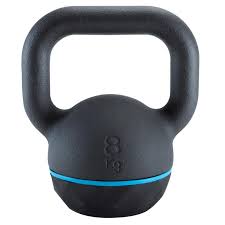
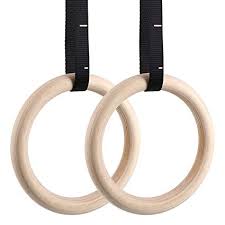
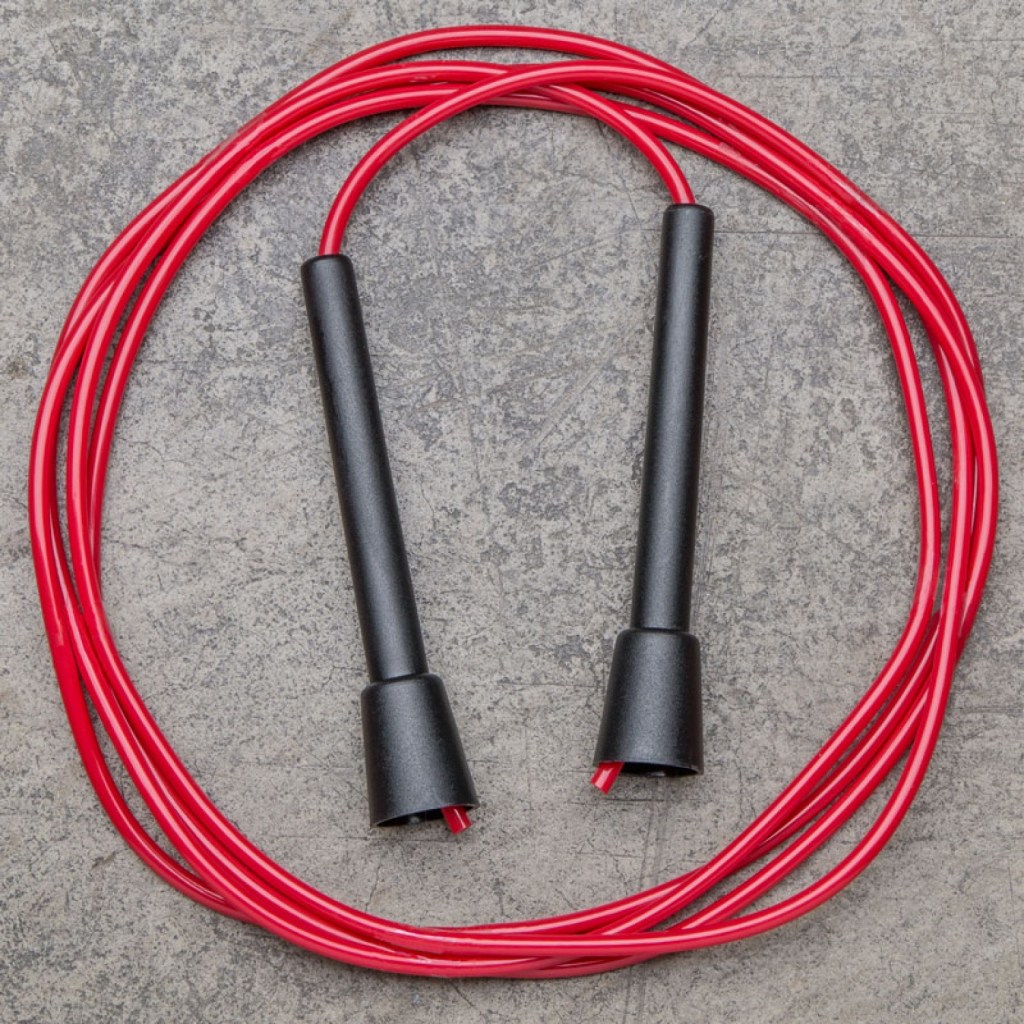
A combination of a kettlebell, a pair of gymnastics rings, and a jump rope is the most simple home gym that you can have matching these criteria we have defined.

PB – to run or not to run.

Read time – 05:00 Minutes

Coach Abhi’s disclaimer : The content written in this blog post is only for general information purpose, and not to be taken as medical advise. The reader is expected to use his or her common sense before using any of this information. I disclaim all responsiblity for any liability, loss or risk, which is incurred as a consequence of the use and application of any of the contents of this blog post.

This time of last year was spent tapering (completing the training) for the TCS World Open 10K. Little did we imagine a pandemic would bring the world of sport and recreation to a halt. I can imagine a world after the pandemic, where most of running events will have stringent rules making masks mandatory, or races being flagged off in waves of ten, or multiple events of the same race happening across different cities to prevent large gathering. Of course none of this may happen at all, and things may just be as good as before but it is my wishful thinking. Fact is things are not going to be the same, we must accept the new normal and move on. The TCS World 10K, Bengaluru which was supposed to be next week, has invited entry forms for their revised race day scheduled on the 22nd November. As much as I am eager to apply, I may have to skip this year. My personal goal this year was a sub 45:00 minute Open 10K. Skipping this year’s race is a hard decision I had to take, to undo the damage of the pandemic. (Life of an entrepreneur.) Personally, I run races (only two a year) for a particular goal finish time (the finisher medal feels a lot more deserving). My intention is giving my best effort, and be ranked as top runners across my age, and gender. When you run bigger races like the TCS World Open 10K out of the sixteen thousand odd participants it is good to know one’s place as being in merit top one hundred runners, and in smaller races top ten is good enough.

I am writing this blog post for those who want to run for a their best timing and not necessarily for those whose goal is to finish the race which most of you will by default. 10K races may not demand a longer or intense preparation as a half or a full marathon, but one cannot run races without training and a goal-mindset. Is it possible to set a realistic goal (finish time) for your very first 10K? It is possible to predict your 10K race timing if you have been consistently running your practice distances at a steady pace. If your practise pace (minutes per kilometre) is 06:30 min/km, it is likely that your 10K average race pace is five percent more than the practise pace. It takes regular practise (four months) of building up aerobic capacity to compete a 10K well under seventy minutes. (Assuming that you will be graduating to this distance from, say a 5K under 30:00.) If your priority is to just finish your first 10K, then it is not necessary to consider finish time. Running for better timings becomes important (again it depends on what you want) after running six races in a span of three years. One must spend time to build up the required cardio-respiratory fitness needed to endure the race distance and make the body adapt to handle distances exceeding race distances. (Remember the principles of SAID.)

Let us understand the methods to improve your overall running performance especially for longer distances like 10K. I am assuming that the reader wants to set a goal finish time and accordingly the suggestions have been recommended. Please note that these training methods have been consistently used by all runners across the long distance formats. Some of the athletes may be having a unique genetic make up to dominate long distance sports, nevertheless these training methods will definitely make anyone run long distances with ease and give a fair chance attempting to run races in their personal best timing. It is important to be consistent, listen to the body, cross-train for strength, watch out for signs of fatigue (over-training), plan nutrition and rest to assist recovery, and be pragmatic with the training program. Some important principles to keep in mind before training in a particular method is to understand that the 10K race demands almost 80% of the aerobic energy system, and 15% of anaerobic energy system (Lactic acid and ATP-CP energy system) and only a 5% of the ATP CP system. In other words one must train predominantly to develop the aerobic energy systems (running for duration exceeding thirty to forty minutes continuously in a sustainable pace), along with improving the anaerobic energy systems by running distances (like 400m, 800m) at a fairly sustainable intensity and once in a ten-day, sprints (60m – 100m) at high intensity. (I am simplifying this concept to keep the blog post suitable for all readers.) The following methods can be used in the overall training program to prepare your body for a 10K race –

  1. Long Slow Distance (LSD) or the Slow-Continuous Method
  2. Interval Training
  3. Fartlek or Speed play
  4. Repeats
  5. Sprints

If you are using a fitness tracker like Garmin, it will be useful to track your runs to check your practise runs are in the 70% of your HR Max. Without gadgets it is possible to check your HR using conventional methods of pulse count(for six seconds) x 10 seconds. To identify your aerobic training HR, use the following steps – Calculate your HR Max with a simple formula,

Max HR = 220 – Age

Example – For a 30 year old male runner, his Max HR = 220 – 30 = 190 bpm (beats per minute) 70% of the Max HR is 190 bpm x 70% = 133 bpm

So for that 30 year old it is recommended to run continuously for forty minutes or longer in the zone of 133 bpm to develop his aerobic capacity. There are other training formulae like, The Maffetone Method which can be used as you improve your proficiency of your runs, and aspire to take up longer distances after getting bored of 10K. I will leave it out of the scope of this post. Remember – some of the more conditioned runners may have a higher Max HR thresholds or other parameters as per their physiology.

To get a PB means to commit to a training program, and attempt sincerely to give one’s best effort. These are some of the things I do (have done) during my training/practise time to get a PB (following these habits can be rewarding on the race day) –

  • Using minimum aid while running, hydration can be mistakenly overrated and can cost run time if one does not acclimatize to run without water breaks
  • Pacing evenly by checking on your splits is a good way to breakdown the race distance, and check your speed variations
  • Avoiding use of head phones, although this is an individual choice, small things can hamper performance or put you at risk as you are unaware of surrounding
  • Learn to breathe in a 3:2 steps, exhale:inhale ratio to maintain your HR steady, invest quality time to train all the respiratory muscles using training aids, and special exercises
  • Practise run terrain must be similar to the actual race, run on trail for trail run, on roads for a road race
  • Wearing simple time keeping device like a stop watch with a countdown timer to set the goal finish time, this may be advisable after four races
  • Having a basic understanding of nutrition including pre race preparations, strategies to load glycogen (using unconventional approach to diet/food can be experimented if the orthodox glycogen loading methods do not work for you)
  • Experimenting with minimalist shoes (if you have a normal foot arch) in practise and switching over fancier shoes closer to the race week – this has always worked for me as I switch from a simple BATA canvas/Vibram Five Fingers to a Nike Pegasus
  • Understanding the fact that mis-pacing is a real threat, and not to be carried away by runners who tempt you to run faster than you have trained for
  • Integrating a strong leg and core strength routine, adding plyometrics (coaching needed) and maintaining body free of injuries by smart stretching

Yes there are going to be many more races to run, many more finisher medals to earn, but the fact that I am not a professional athlete and by occupation being a Coach/Entrepreneur (full-time), it is a hobby to run races to keep myself at par with the above-average runner’s fitness. As a recreational athlete I cannot afford to nor do I have the luxury of extra time to give my best efforts to this goal of getting a sub 45:00 Open 10K in the present situation of pandemic/recession crisis. I do not intend to set a goal and then leave it half way. So I have come to point where I am finding my weekend long runs just as satisfying as the race itself, I will keep running and hoping to get that PB next year. For now – it is not to run!

QUOTE THAT INSPIRED ME TO WRITE THIS BLOG POST –

“Every morning in Africa, a gazelle wakes up, it knows it must outrun the fastest lion or it will be killed. Every morning in Africa, a lion wakes up. It knows it must run faster than the slowest gazelle, or it will starve. It doesn’t matter whether you’re the lion or a gazelle-when the sun comes up, you’d better be running.” – Chirstopher McDougall author of Born to Run : A Hidden Tribe, Superathletes, and the Greatest Race the World Has Never Seen (2009)

Coach Abhi is a ‘Strength Coach’ holding a Master of Physical Education and Sports Sciences (M.P.Ed NET) with a meritorious national level competency in his academic discipline. His content comes from coaching/training/learning experience of 10000 plus hours. Detailed bio here https://shakti.fitness.blog/author/

All rights reserved. Copyright © Abhijith Ravindra undefined

In the third episode of ಶಕ್ತಿ Shakti podcast I spoke to Ultra Runner Sandeep, a fellow Mysorean who has been running for a decade now. He is really smart, well read, a nature conservationist, and a data engineer settled in Melbourne. He speaks to us on barefoot running, his journey over the years into Ultra running, his training methods and we have a little casual chat in the end in Kannada to wind up the forty eight minutes long episode. Please listen if you want to take up ultra running. I am adding the podcast link to Spotify. Please note that it is available on SoundCloud, SPOTIFY app, and JioSaavn app on your phone – just search for ‘Shakti Podcast’ or ‘Coach Abhi’. I am yet to add all episodes here to avoid the clutter.

For those who want to register for the TCS World Open 10K – I found out from their website that online registrations will open from 8th September, 2020 on https://tcsworld10k.procam.in/

Latest Posts

Previous Blog Posts by Coach Abhi

Being nimble.

Read time – 05:00 Minutes

Coach Abhi’s disclaimer : The content written in this blog post is only for general information purpose, and not to be taken as medical advise. The reader is expected to use his or her common sense before using any of this information. I disclaim all responsiblity for any liability, loss or risk, which is incurred as a consequence of the use and application of any of the contents of this blog post.

My son is going to be three soon. From the time he has learnt to walk, he grew up in the dance school and the gymnasium. In fact he took his first step to walk in my wife’s dance school when he was ten months old. Till now, my wife and I have not taught him any deliberate movement or dance/sports skills or exercises, or how to move. Why? He is THREE! That is why. We are given “advise” on how important motor skills are! Or suggestions on which sport he must play. (Yes, it happens!) Sometimes it can get a little annoying (we let it pass) to listen as parents. We believe in free play and let Ethan learn all the movement skills necessary to balance, to fall and get back up, overcome obstacles, to roll, and move like a ninja, and do seemingly tricky movement. How did we do this? It is simple, we took him to the local park, almost every day. Toddlers learn to play, and to move naturally when given the right environment in the presence of a parent.

Observing my toddler boy fascinates me, as to how is it possible to move with such agility. In fact I record some of the movement patterns he does on the floor and try it myself, so who is learning from whom? A long time back, every adult had these movements in them until losing it to a ‘sedentary’ life. The fact that adults do not move and do not play, are perhaps some of the main reasons for illness (both physical and mental). For an urbanized child, play in this technological era does not mean going outdoors, it means a close to realistic experience of racing, shooting and strategy games on high end gadgets. Sony rightly named its video game console ‘playstation’ redefining the idea and the scope of play. Who could imagine this becoming a sport itself. This is play after all. No, technology is not the culprit, and don’t demonize gadgets. It is not an agenda of any gaming companies to keep people indoors, it is the abuse of such gadgets which is the real problem. As adults we need to re-learn some of these ideas of playful movement from toddlers/kids like –

  • rolling – forward or backward rolls on the bed (safety first)
  • jumping on a trampoline
  • hanging from structures and sitting on the floor (as many ways possible)
  • running free or sprinting (technique training may be needed for adults)
  • crawling like a baby or a bear or mimic any quadrupedal movement

Why should an adult do these? When I am talking about playful movements it does not need any justification, but for the sake of it –

  • it might actually save your life – rolling for example is a skill which can greatly decrease the risk of injury during accidental falls
  • spatial awareness – learning a sense of proprioception as you move
  • improves overall coordination of your body with the senses
  • can be a different way to cross train or change the monotony of “fitness” routines
  • has a strong carry over effect to disciplines like martial arts, dance in physical preparation

I publish a poll asking my students to vote choosing a training session in the lockdown (for those online classes we teach), somehow every time one particular option of ‘floor exercises’ or ‘locomotion exercises’ never wins the poll. They are smart to understand my language and what I mean, so it is virtually impossible to disguise it as any other option. So Anjan and I, end up teaching it (against their will) as our choice at least once a week. Movement exercises unfortunately have no instant reward or satisfaction of doing three hundred burpees, or the fact that you can’t count your calories (actually you can estimate every physical activity but that is a different matter), or you might end up looking stupid or incapable, or it’s just the attitude of ‘it’s too hard’ or a dislike towards it. Reasons may be one or all, but most of them have forgotten the importance of movement as a form of physical activity. I always make it a point to add these movement practises/drills in my training methods. Some of our gymnasium students or visitors have not really understood why we do Friday’s movement classes. I am hoping that after reading this post the purpose of movement practise is understood.

It was 2010, preparing for something serious at that point of time I was looking for training methods to become more mobile and I had started to move away from conventional bodybuilding style of training. I started exploring martial arts and I stumbled an interesting man called Ido Portal. I was (am) nerdy enough to dig deeper for knowledge, almost intuitively I looked up his work. It did not strike me almost six years later the main stream media would feature him on GQ (UK) or I never imagined back then, this man would become a Messiah leading a global movement culture. In my opinion it is Ido Portal and his disciples (present and former) who represent the movement culture in its true sense. Many mistakenly believe that it was McGregor that made Ido popular, but if you really understand a man like Ido and understand his work, you will dismiss this disbelief.

The Ido Portal Method’ is a work of genius the roots of which can be traced to ‘Hacasa’, Ido Portal’s Capoeira and Movement School in Haifa, Israel. Ido’s work is hard to understand at first as his videos on YouTube may not really give the correct picture of him or what he actually does, but if you manage to dig deep on your own with your own critical thinking, you will find treasure! I will leave that exploring work to you readers. Note I am not going to violate any copyright, or intend to drive traffic (on ethical grounds) to my page adding his videos, so please find it yourself on YouTube searching for Ido Portal and in the playlist- watch the collection ‘Ido Moving’. His thoughts are profound and he tells his followers to walk next to him, not behind him. His talks or ideas might not be suitable for all as he talks about “breaking the dogma” and some of things are best heard from the man himself. It is Ido’s work that has inspired me to work more on movement and look at all the diverse nature of human movement.

Another reason why I integrate movement practise is the inspiration I got learning movement drills and preparatory exercises of kusti (wrestling). In our city (Mysuru) it is not so uncommon to see people practising the so-called “animal flow”. Visit the Chamundi hill you will find group of seasoned pailwaan (indigenous wrestlers) walking up hill and down hill on tarmac in their ಹುಲಿ ಹೆಜ್ಜೆ (literal English translation is not possible so let’s call it ‘Tiger Walk’). This is one of the most effective conditioning exercises in my practise. Some simple variations of the quadrupedal movements can include –

  • Bear Crawls
  • Crab Walk
  • Frog Jumps
  • Monkey crawl
  • Variations of bear crawl

Complex variations of movement are –

  • Inch worms
  • QL Walk
  • Cossack Squat transitions
  • Bridge Walk
  • And other Capoeira drills

The readers can learn these with simple practise of performing these patterns on floor for a minute, resting for a minute and repeating as needed. The techniques and execution of movement some few variations are complex, and may need coaching inputs. I will be adding a video footage of my demonstration of some of the exercises shortly.

Move my dear readers. Be nimble!

QUOTE THAT INSPIRED ME TO WRITE THIS BLOG POST

“Adapt what is useful, reject what is useless, and add what is specifically your own.” – Bruce Lee

Coach Abhi is a ‘Strength Coach’ holding a Master of Physical Education and Sports Sciences (M.P.Ed NET) with a meritorious national level competency in his academic discipline. His content comes from coaching/training/learning experience of 10000 plus hours. Detailed bio here https://shakti.fitness.blog/author/

Protected by Copyscape

All rights reserved. Copyright © Abhijith Ravindra undefined

My podcast ಶಕ್ತಿ Shakti is now available on Spotify. In our second episode, Shane who is a pro athlete, movement artist and a dancer shares his experiences of being a B-Boyer and his ‘streetfitmovement’. Link attached in the end of this post. Episode is also available on SoundClound. Release date – 5 May 2020, Tuesday.

SOUNDCLOUD LINK – https://soundcloud.com/shaktipodcast

All about ROM.

Read time – 05:00 Minutes

Coach Abhi’s disclaimer : The content written in this blog post is only for general information purpose, and not to be taken as medical advise. The reader is expected to use his or her common sense before using any of this information. I disclaim all responsiblity for any liability, loss or risk, which is incurred as a consequence of the use and application of any of the contents of this blog post.

In your childhood, the nearly impossible things you did like kicking your leg so high that you could almost look like Van Damme. Or the time that you fell off and landed right in a front split, and walked (ran) off like a legend. Those were times when your joints were prepared to handle almost anything thrown at them. If you were do it now as an adult (stunt gone wrong or an accidental fall) you would probably end up in an ambulance! Range of motion (ROM) available in a child’s body compared that with an adult’s body (joints) makes them virtually injury free. In this blog post you will learn the importance of having a good range of motion (ROM) in joints. Being flexible not only prevents injuries but also keeps your body pain-free.

In his book Stretching and Flexibility, author Kit Laughlin writes that the most important reason to stretch – it simply feels wonderful to do. World class Coaches like Christopher Sommer, former Team USA National Coach in his interview says, “if the best in the world are stretching their asses off in order to get strong, why aren’t you?” Highly revered Yoga guru, B.K.S. Iyengar in his book, titled ‘Yoga for Sports’ has written extensively on the benefits of stretching by prescription of specific asanas. Some of the reasons why stretching is important are –

  • to overcome body pain
  • to enhance recovery
  • to develop more force and speed
  • to achieve higher movement economy
  • to improve execution of skill
  • to prevent injuries and promote longevity of joints

The last four reasons are more relevant for athletes, but nevertheless applicable to general population. How flexible should one you be? Flexibility as a motor ability required by professionals in combat sport and artists like dancers, and acrobats are an occupational necessity which sustains their career. If you were to think of the most flexible people on the planet, you would probably think of contortionists, Shaolin monks, Olympic gymnasts, and Yoga masters. These extremes of flexibility may not be necessary for an average adult. For an average adult (office going fairly physically active) general flexibility goals can be –

  • ability to touch toes without bending knees
  • getting into and out of a simple bridge
  • raising arms overhead without slouching
  • ability to sit down to a full squat without tipping over one toes

Mobility, stretching, suppleness and elasticity are all the different attributes of flexibility usually used as tools of branding exercises commercially. But in reality these are the means to become more flexible. In sports sciences, flexibility is the ability to execute movements with greater amplitude or range. The range here refers to the range of motion of a particular joint. Remember my last post on SAID, the same applies here. As a matter of fact, joint ROM practised in a particular manner is specific way is limited to that same movement in the same plane. Sitting in a pike (legs together perpendicular to torso) touching your toes is harder than the same movement standing upright bending forward to touch toes. If you have practised standing (toe touch) then extra practise is needed to get it perfect in pike position. Not all joints have the same range of motion. Before getting into this further, an understanding of the following concepts are necessary- your muscles move the joints in ranges of motion which are restricted to factors like –

  • anatomical structure of a joint – greater ROM is available at ball and socket joints vs little ROM in the spine (in comparison with hips and shoulders)
  • ligaments of the joint – length, thickness and strength of the connective tissue
  • ability of muscles to stretch, or length-tension relationship in muscle tissue
  • coordination (regulation by the CNS – central nervous system) – to execute complex dynamic movements
  • strength and stiffness – if a desired ROM has to be achieved then the agonist has to be strong, while the antagonists should not be stiff
  • Other factors include the times of day (temperature), age of the person and hidden factor like training history of flexibility in childhood

Flexibility in sports sciences are of two types – passive and active, with a more elaborate classification depending upon the action of muscles, presence or absence of external force –

  • dynamic active flexibility (developed in most of the sports training) – complex ability to relax extended muscles with contraction of moving muscles
  • dynamic passive flexibility (below and above pain threshold) – achieving maximum movements of joints with external support
  • static active flexibility (ability to hold extended postition using only agonists and synergists)
  • static passive flexibility – ability to hold extended positions using the strength other than the stretched muscles or by other external means

Flexibility is often misinterpreted by the practitioners by their training methods. Even a highly trained or skilled (specifically talking about flexibility) individual may not necessarily understand what makes them so flexible or how to train for flexibility correctly. Injuries may not have happened due to incorrect flexibility training but there are definitely a lot of hours wasted with the time spent in the casual stretching. It is not the trainers or instructors but the lack of seriousness by the students who do not pursue flexibility with same intention, say when they train for strength. Generally with the average gym going men, the attitude towards flexibility itself is that “it’s a waste of time”, as their preferred battle scars are, “I got my left shoulder busted attempting a heavy press” or the “soreness” from those bicep curls.

The problem in flexibility training mostly is lack of correct training knowledge just as strength training. In the recent times the fitness trends are shifting towards exotic practises which need a very high level of flexibility, and I as a Coach am concerned with the safety of this new “trend”. I have seen bizzare ads on social media claiming to make someone get a full split in just a day! Well I really wonder if that “Flexibility Course” or “Instructor” is asking you to use anesthetics on your legs or completely paralyze your lower body to get those splits. There are other “splits courses” that are more kind promising a “four” week program. The fact is, an office going adult with little or no physical activity is going to take close to eighteen months of specific training to get a descent split assuming he or she does regular training. So what about that “four week” course? Let’s just leave it there.

Training Methods used to increase flexibility are dynamic method, slow stretch and hold method, post isometric stretch or PNF. Correct coaching inputs are necessary to gain a high degree of flexibility safely. Keeping in mind one’s end goal, one must pursue a suitable stretching program. Like all motor abilities, flexibility has to be gained, with a principle of moving from general to specific, and then develop a routine that will give the intended results or maintain the gained flexibility over a long period of time.

Dynamic stretching is performed by gradually increasing movement range, speed of movement, or both. Sets of eight to twelve repetitions can be performed one joint at a time from head to toe. Important to note that in dynamic stretching there is no pause or holds of stretched limbs. As a specific outcome this stretching method develops dynamic active flexibility.

Static active stretching is demands more focus, where the stretched muscle is relaxed and strength is build in the muscles opposing them. These are slow movements executed in a duration lasting six seconds. The end range is reached slowly and the joints are restored to resting state slowly. This can also improve with a static passive flexibility training.

Static passive stretching or isometric stretching is a method to train a muscle after it has undergone fatigue. The Russian sports scientist Matveyev (Father of Sports Periodization) prescribes performing these stretches two to four times a week using tension lasting five to six seconds. As a warning – this method causes severe soreness or may lead to excessive fatigue if practised without professional guidance.

With these concepts in mind, you can practise stretching on a daily basis to improve your quality of life. When it comes to flexibility, patience is a prerequisite! All the methods mentioned here can be used and one method can actually contribute to more than one type of flexibility. Start slow and get your ROM!

QUOTE THAT INSPIRED ME TO WRITE THIS BLOG POST

“Yoga teaches us to cure what need not be endured and endure what cannot be cured.”Shri BKS IYENGAR , Padma Vibhushan Awardee, Yoga Master and author of renowned book, ‘Light on Yoga’.

Coach Abhi is a ‘Strength Coach’ holding a Master of Physical Education and Sports Sciences (M.P.Ed NET) with a meritorious national level competency in his academic discipline. His content comes from coaching/training/learning experience of 10000 plus hours. Detailed bio here https://shakti.fitness.blog/author/

All rights reserved. Copyright © Abhijith Ravindra undefined

Shakti Podcast will be releasing the first episode where Coach Abhi will interview Ms. Roopa Nanjunda Rao, a senior yoga practitioner with twenty years of yogaabhyasa (yoga practise). She is professional working for AT&S India for the last twenty five years. She is a Mysorean, and a proud mother of two children. Podcast releasing on the 29 APRIL 2020.

Releasing our first episode of Shakti Podcast. Available on 29 APRIL 2020.

Lifters don’t buy running shoes.

Read time – 05:00 Minutes

Coach Abhi’s disclaimer : The content written in this blog post is only for general information purpose, and not to be taken as medical advise. The reader is expected to use his or her common sense before using any of this information. I disclaim all responsiblity for any liability, loss or risk, which is incurred as a consequence of the use and application of any of the contents of this blog post.

Have you ever wondered, “Can a weightlifter (professional) run a marathon under six hours?” or “Why can’t an endurance athlete (professional) perform two times bodyweight clean and jerk?” Is it really necessary for these athletes to perform at an average in a sport other than their chosen career sport? How should a non sportsperson go about physical training? These are the questions that I intend to answer in this blog post by explaining some of the fundamental concepts of sports training.

The human body in a state of good health has a stable internal environment called homeostasis. Whenever there is a disturbance to this steady internal environment (homeostasis), the human body can adapt to the changes by restoring the state of homeostasis. The adaptation process modify the metabolic and physiologic functions upgrading from previous state of homeostasis to a better or more efficient one. In sport training, the training load (demands of the sport like strength, endurance, speed) in form of exercises cause adaptation in the body of an athlete. These adaptations can happen only under a highly structured and carefully planned exercise regimen in order to regulate the training load (optimum load). So this is where coaches come in to the picture as they understand the complex training programs and their specificity.

In his hypothesis ‘Specificity of motor learning’, Dr. Franklin Henry proposed the concept of SAID principle. SAID stands for ‘Specific Adaptation to Imposed Demands’. This concept explains as to why a lifters needs to lift more, and an endurance runner needs to run more. If the coach finds that his/her athlete is lagging in a specific motor ability then the goal is to improve that particular motor ability with specific exercises, with specific intensity, volume, and other parameters so that the athlete’s body adapts progressively in that particular motor ability.

In general every sport has a high level of fitness requirements (including high level of skills). Specific sports have specific fitness requirements in addition to the general fitness requirements. Skill is equally important, in fact without a high level of sport-skill (competition standard) one cannot be called an athlete but this topic (skill) is out of scope in this post. In sport sciences we define physical fitness as the sum total of five parameters (motor abilities) namely strength, endurance, flexibility, speed, and coordinative abilities. To this list we can add more complex parameters like strength endurance, maximum strength, explosive strength, balance, agility, power, and reaction time which are a by-product of two or more motor abilities.

Coaches spend time or the correct amount of time in conditioning and skill training for a particular sport, hence you see an athlete tailor made for their sport, and their physique too has a signature of the conditioning that they undergo. A trained eye can predict the sport of an athlete by the physique of an athlete. A weight lifter is expected to train (lift) specific to the event of weightlifting whose training does not even remotely look like bodybuilding or powerlifting. The demands of sport (weight lifting) requires little endurance so it makes sense if a weight lifter (active or retired) is unable to run a full marathon under six hours. (Never trained for it!) Should an endurance athlete be lifting really heavy weights often? Is it really necessary to clean and jerk two times body weight for a marathoner?The same logic applies to an endurance athlete who uses the barbell to cross train once a week and prioritizes building up on the weekly mileage of clocking distances exceeding the race distance.

Each and every sport has its own set of demands of motor abilities, some greater than the other. Think about this example, does a shooter (sport and not military) need a high level of physical fitness compared to that of a boxer. If a shooter is as fit as a boxer (don’t take this quite literally), then he is better off boxing because he/she probably has spent more time in conditioning (physical fitness) than technical skill of the sport. (On a lighter note – it is more dangerous for a boxer to be as conditioned as a shooter!) Adaptation is not limited to regular athletes in a particular sport, the Paralympics is a proof that the special population can be trained to perform at world class level.  By training adaptation, anyone can train to be better at particular motor ability as long as they adhere to a training program designed to bring out the specific performance. That’s why the domain of recreational sports even exist giving the opportunity of sports training to the masses. The only exception of adaptation would be in a small percentage of population with rare medical/genetic condition.

When it comes to physical fitness (motor abilities) for general population, I personally have come across CrossFit as something close to athlete preparation. It has become a sport in itself with its own hybrid training model of integrating elements of gymnastics, weightlifting and track events. The style of training is high intensity intervals with a lot of smart variations of compound movements. This can get as good as the CrossFit Coach incharge of the program design. CrossFit has got the general population into training methods of elite sports and do away with the common notion of gyms with typical bodybuilding and cardio programs. With their own ‘Fittest on Earth’ title which has grown in popularity, their athletes have shown tremendous potential. An average person (non sporting background) looking forward to train for performance versus looks can adopt CrossFit style of training.

Now that you have understood the basic concept of adaptation (SAID), all you need is a simple combination of basic endurance and weight training to to take your first step to fitness. Once the body acquires basic motor abilities, then you can set a goal of becoming an all round performer with abilities like lifting two times your body weight, have an aerobic capacity to run continuously for sixty minutes, ability to perform advanced bodyweight strength exercises like muscle ups, pistol squats and be flexible enough to perform middle splits. It is important here to know that the fitness once gained can get stagnated after a point of time, or even deteriorate if the principles of periodization are not followed. Specific goals like running a full marathon or completing an Ironman takes a lot of time, effort and high quality coaching as it demands careful planning, and adherence to a specific training program. These goals can be pursued by an untrained individual as well, as long as they have the correct coaching and discipline to achieve their goal.

The lifter did not buy running shoes. He/she never ran!

Here is a video of mine demonstrating ring muscle up after a specific training program to achieve the same.

QUOTE THAT INSPIRED ME TO WRITE THIS BLOG POST
“True knowledge exists in knowing that you know nothing.” – Socrates.

Coach Abhi is a ‘Strength Coach’ holding a Master of Physical Education and Sports Sciences (M.P.Ed NET) with a meritorious national level competency in his academic discipline. His content comes from coaching/training/learning experience of 10000 plus hours. Detailed bio here https://shakti.fitness.blog/author/

All rights reserved. Copyright © Abhijith Ravindra undefined

The ‘Core’ confusion.

Coach Abhi’s disclaimer : The content written in this blog post is only for general information purpose, and not to be taken as medical advise. The reader is expected to use his or her common sense before using any of this information. I disclaim all responsiblity for any liability, loss or risk, which is incurred as a consequence of the use and application of any of the contents of this blog post.

Warning : Some of the exercises found in this blog post may not suitable for those with issues of spine, high blood pressure and cardiovascular diseases.

A strong core does not mean sporting a six pack abs. It goes beyond what the eyes can see. A strong core training program must have a combination of exercises to strengthen all the muscles of the abdominals, obliques, and the lower back. Often poor selection of exercise and faulty training methods result in a weak core. The lack of correct training knowledege, myths and an increasing number of general population with back aches/pain is what I have termed ‘core’ confusion!

While the core anatomy, exercises for core, and their training methods can be eloborated in a book itself (yes, it is that big of a topic), this blog post aims to simplify core training giving the reader enough information on exercise selection, frequency and training program to develop their own routine. Limited exercise selection, specificity, ease of execution, and scope for progression are the criteria used for the recommendations.
What is the core? In exercise sciences the term encompasses a larger meaning. The core is the term used in reference to the following muscle groups of the torso which include the rectus abdominus, transversus abdomials, internal and extrenal obliques, the quadraus lumbordum, the spinal erectors, the multifidus, and the muscles of the hips. This term is most of the times misused in the gym ‘jargon’ which is synonymous with ‘abs’. Back in the mid 2000s there was an emerging trend of ‘functional training’ for core with a lable of ‘sport specific’ making it seem that as if only few sports demand such abilities. As a fall out there were attempts to “invent” core exercises or some bizzare appratus adding to the confusion.

A good coach or a S&C professional (strength and conditioning) understands the importance of prescribing exercise routines which are generic, low risk, and integral. A core routine is not an application of execise as a ‘sport specific’ one, but to maintain/improve overall function, injury prevention, and maintain good posture. (Yes, one of the secrets of good posture is a strong core.) There are advanced exercises for atheltic population which demnad more proficiency, effort and apparatus. (Not in the scope of this post.)

Before we move to the exercise section, it is worthwhile to understand what not to expect from these exercises so I am busting some myths on ‘core’ strength (ones I have come across often) –

  • the exercises are not an instant remedy for your back pain.
  • there are no secret exercises that elite athletes perform.
  • six packs – it is only a result of low body fat percentage.
  • core training need not be performed everyday.
  • skipping core training does not make the midsection fat.
  • it does not cure (no credible evidence) any gastrointestinal disorders.
  • it will not keep your waistline lean or shredded.

Reccommended Exercises – The exercises recommended here are general exercises which can be performed by anyone (athletes/non-sportspersons) at home without any apparatus. For purpose of simplification the exercises are grouped under A, B, C, D , E and F. There are only two options to choose in each group. You can pick one exercise from consecutive groups and perform them as a superset for five repetitions each. Note – an exercise with static next to them means it is an isometric exercise to be held for ten seconds.

  • A : Leg Lowers or Hollow Body Rocking (Static)
  • B : Arch Body Up or Prone Leg Lifts
  • C : Modified Sit Up or Crunches (Toe touch)
  • D : Side Bends or Side plank (Static)
  • E : V Sit or Leg Thrust
  • F : Windshield Wipers or Russian Twists

Example : Select one exercise from A and B, perform five repetitions each without rest. This is a super set. Repeat three super sets with a ninety second rest interval between supersets. The entire routine will have three super sets from – A & B, C & D, and E & F. Time taken to perfrom this will be approximately fifteen minutes. A beginner will find this as an optimum intensity giving him or her enough recovery time before the next session which can be scheduled after two days with a different combination of super set.

The ‘abdominal hollowing technique’ or ‘bracing’ ‘draw ins’ or ‘stomach vaccums’ is a lost art of core training which was a powerful tool used by old school strong men. This can be performed in a variety of positions and used as a specific exercise for the ‘transversus abdominus’. Not only this technique improves the core stability but also improves lung capacity. To do this, lie down on the floor with the pelvis in neutral position, the knees are bent – perform an suction of the abdominals (relaxing the abs and exhale at the same time) as if the belly button is sinking to the floor. Hold this for ten seconds. Perform this lying down supine to start with and then attempt in this technique in sitting, standing, kneeling, lying down prone and lying down on the side. A bent arm plank can be done with this ‘bracing’ technique as a challenge. These exercises can be performed before starting the core routine as preparatory exercises.

Exercise demonstration by Coach Abhi

Keeping in mind all the principles, it is possible to create a simple yet effective core routine. I hope that you can make the most of this information. You will find me demonstrating these exercises in the attached video, please use it as a learning aid. For further information, you can send a query using the contact form with post title as subject.

Hope that your ‘core’ confusion is now clear!

Yours strongly,

Coach Abhi.

QUOTE THAT INSPIRED ME TO WRITE THIS BLOG POST

“It isn’t the mountains to climb that wear you out; it’s the pebble in your shoe.” – Muhammad Ali.

All rights reserved. Copyright © Abhijith Ravindra undefined

Coach Abhi is a ‘Strength Coach’ holding a Master of Physical Education and Sports Sciences (M.P.Ed NET) with a meritorious national level competency in his academic discipline. His content comes from coaching/training/learning experience of 10000 plus hours. Detailed bio here https://shakti.fitness.blog/author/

Setting up your own home gym.

Coach Abhi’s disclaimer : The content written in this blog post is only for general information purpose, and not to be taken as medical advise. The reader is expected to use his or her common sense before using any of this information. I disclaim all responsiblity for any liability, loss or risk, which is incurred as a consequence of the use and application of any of the contents of this blog post.

This blog post is mostly suitable for those

  • who intend to setup a home gym after the lockdown looking for a plan to execute.
  • who have an existing home gym having more than the necessary tools – time to downgrade.

The invasion of nCovid-19 will permanently change the way we live our lives creating new norms of lifestyle. As I am writing this, we the entire nation of India are under a lockdown which is now slowly taking a toll on the physical and mental health of the general population. With all the gymnasiums, activity centres, yoga studios and dance schools shut, we are left with little or no physical activity (exercise). The present circumstances and the degree of danger presents a big challenge to venture out for a jog or a run as we risk violating social distancing.

There are plenty of workout apps available which will let you train without any equipment or apparatus. Most of these are good enough with a simple formula of combining interval training, basic dance moves and rudimentary exercises, while other apps use guided yoga progressions, mindfullness practise and social credits giving you a temporary but much needed drive to continue your training. Apps can get stagnated after a point of time if content becomes too monotonous. It is recommended that every hosusehold having a ‘home gym’ which is small space dedicated for physical training (indoor or outdoor) with some basic strength equipment or apparatus, no not the treadmill or the elliptical.

In order to keep the home gym minimalistic we can keep a space constraint of six square feet with not more than three things costing not more than an annual subscription to one of those fitness apps. A combination of a kettlebell, a pair of gymnastics rings, and a jump rope is the most simple home gym that you can have matching these criteria we have defined. The three equipments suggested here can be replaced by dumbells, suspension trainers, and a boxing bag. So long as you can setup your home gym using limited space, three equipments, and a restricted budget the idea of home gym is worthwhile.

Your home gym must be located ideally in your personal space like a bedroom or dressing room or utility room so that you start training after or before a particular daily ritual. We are creatures of habit, and our behaviors are not accidental. Your home gym is not the gym of the living room. This is the last place to have the gym as you are very likely to leave the apparatus untouched leaving it only for display. To make the most of your training have a board on the wall to document the training or write your daily training goals. Strength goals achived keeps you going for further gains.

If you have a home gym with a lot of things which are not used, you are better off trading them (treadmill/elliptical) with something of more utility. Before the demand for exercise apparatus spikes or a scenario where you virtually do not get any equipments, it is time that you visit your local sports store (after the lockdown) to shop for your home gym. Get them online if you are lucky enough. Avoid unncessary purchases, stick to the rule of thumb of investing in not more than three things costing not more than an annual subscription of Netflix. Before the next wave of crisis hits us, let us be prepared to perfrom strength training in your own home gym. This may not be of high priority as of now indeed, but training in your own home will keep your morale up and offset the risk of sedentary living. Strength training prepares you for emergencies that you might face in this time of crisis.

In the next blog posts I will be writing on the basic strength exercises that you can perfrom with coching inputs. Keep your spirits up!

Yours strongly,

Coach Abhi.

QUOTE THAT INSPIRED ME TO WRITE THIS BLOG POST

“What you seek is seeking you.” – Rumi.

Coach Abhi is a ‘Strength Coach’ holding a Master of Physical Education and Sports Sciences (M.P.Ed NET) with a meritorious national level competency in his academic discipline. His content comes from coaching/training/learning experience of 8000 plus hours. Detailed bio here https://shakti.fitness.blog/author/

All rights reserved. Copyright © Abhijith Ravindra undefined