
Read time – 05:00 Minutes
Coach Abhi’s disclaimer : The content written in this blog post is only for general information purpose, and not to be taken as medical advise. The reader is expected to use his or her common sense before using any of this information. I disclaim all responsiblity for any liability, loss or risk, which is incurred as a consequence of the use and application of any of the contents of this blog post.
Shri Aditya Mhaskar, a former National Mallakhamb champion (sixteen times gold medalist) and a Senior Coach from the iconic Shivaji Park, Mumbai spoke to me recording for the fourth episode of my podcast. Aditya spoke on his childhood days taking up Mallakhambh as a sport having advised by his Physical Education Teacher. This blog post is particularly useful for parents who intend to see their children take up professional sports, or for amateur instructors or PE teachers/coaches looking for a legitimate way to get their students achieve success in competitive sports. I must confess that parents have asked me to make their child a sprinter or seek my coaching believing that their child is a sprinting prodigy only to be told that their child did not make the cut in the thirty yard dash or may be not having the necessary physical structure to become a sprinter. The mistaken belief that their child is the fastest in school with little or no competition, or that they have seen another child who made it big in athletics, just like one of their nephew (fastest child in the family) destined to be the next Milka Singh, this is really not the way to identify talent or to nurture it thereafter.
It takes courage (moral) on physical education teachers or coaches to make it clear to over expecting parents on the potential or assumed talent of their child. The parents may have done the right thing assuming that their child has potential, but unless the physical education teacher or the coach insists that the child has it in him or her, parents should resist the temptations nor let themselves be influenced to take decisions on these matters on their own. If a family has the privilege of having national or international athletes, or someone with credible competency in the domain of sports to advise on talent identification, then it makes sense to take action on such advise. It takes a lot of convincing and a sincere effort to educate/clarify the reasons of why a child should never be forced into a sport in which he or she may never have a fair chance! The truth cannot be any more painful but often a mistake of incorrect talent identification can lead to
- false expectations by the parents seeking an achievement from their child
- child getting into depression or develop dangerous mental health issues often causing irreversible damage on the child
- risking the child’s safety by putting them through rigorous physical exercise
- the loss of childhood itself as the child mistaken to be a prodigy makes the sacrifice of devoting a large part of their time to training
- creates a pseudo-athlete phenomena where child/parent may fail to understand the difference between professional sports and recreational sports
- waste of valuable tangible and intangible resources which could have been put to better use
The process of talent identification in sport is not a matter of chance or luck, there are standards as per the demands of the sport one can predict the likelihood of success of a ‘talented’ child in professional sports. The steps in sports sciences to identify talent are –
- Screening of children on basis of health and physique, general physical performance, abilities of the child (mental) and the overall ecosystem surrounding the child.
- Selection for further training after completing a basic or general training for three to four years. Selection is objectively done based on motor abilities or demands of a sport, prerequisite physique and performance, and intangible qualities like personality traits, emotional intelligence and ability to tolerate the intensity of training.
- The final stage of selection of the child to the specific sport originally intended, which is a former sport played earlier (three to four years) with special attention to ‘talent indicators’ which are a combination of objective and subjective performance evaluation of the child in that particular sport.
One of the main ingredients in the making of a successful athlete at a high level of sports performance is coaching as the process of talent identification starts with a physical education teacher or a coach. Coaches are involved in the prognosis of sports performance. This means that coaches know the exact prerequisites which may not be as clear as an aptitude test, but only by their experience or intuition can the talent identification process be done. Another factor to weigh-in is that, as the child grows older the heredity reveals itself, i.e crossing adolescent stage means the child may not receive the training as intended due to sudden changes in physical, mental and emotional and mostly this is the time (thirteen to fourteen years) when coaches can more or less predict the future of the child’s success in sports. The assumption here that the talent has already been identified in the early childhood and with the onset of adolescence the child has completed the intermediate level of practise or sports training. The coaching aspect is the most complex part of converting this identified talent over many years into a high performing athlete. Most of the debut world champions’ performance can be traced to their coaches (former in some cases) who would have worked with them more than four years (minimum) in giving them ‘perfect practise’. The qualities and work ethic instilled by the coaches in the making of a winning athlete is the secret to a long successful career in sports.
Coaches need to develop a fool proof system for assessment or evaluation of career trajectory of a successful athlete by looking out for the following aspects in the athlete who has been selected after talent identification –
- Consistency in performance and rate of increase in performance over training cycles
- Ability to maintain an average performance throughout the year
- Ability or perform in competitions and progress in merit with subsequent competitions
- Ability to handle the stresses of demands of the sports without any serious injuries or mental health issues
I insist the readers (especially parents with toddlers) of this blog post to read the following books if you are interested to learn more on the often loosely discussed concept of ‘talent’. This might actually save you or your child in the right time, or give you the confidence that the path you or your child are on is the right one!
- The Sport Gene : Inside the science of extraordinary atheltic performance by David Epstein
- The Talent Code : Greatness isn’t born. It’s grown. Here’s how by Daniel Coyle
- Peak : Secrets from the new science of expertise by Anders Ericsson
Sports talent is abundantly out there, it starts with correct identification, and a systematic nurturing of that talent in an ecosystem. As a parent myself I know how rewarding it is to see one’s child perform some unusual skills unexpected of them or see them involved in a particular activity making us feel that they are special, but do not rush. Take longer time to observe carefully and don’t jump to conclusions with any child’s talent or the lack of it. Let the children play as that’s where it all starts!
Quote to ponder over – “A stoic is someone who transforms fear into prudence, pain into transformation, mistakes into initiation, and desire into undertaking.” – Nassim Nicholas Taleb
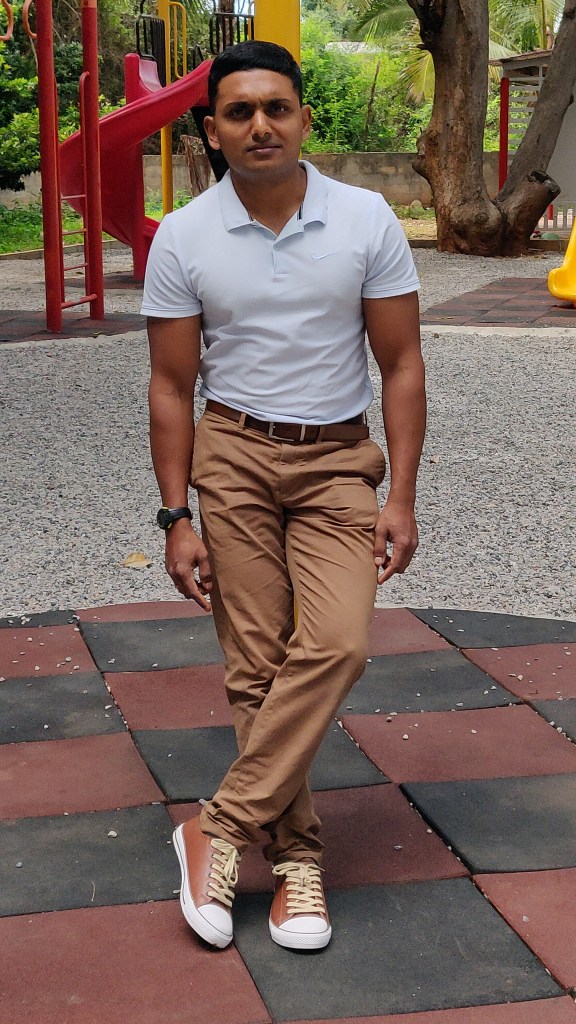
Coach Abhi is a ‘Strength Coach’ holding a Master of Physical Education and Sports Sciences (M.P.Ed NET) with a meritorious national level competency in his academic discipline. His content comes from coaching/training/learning experience of 10000 plus hours. Detailed bio here https://shakti.fitness.blog/author/
All rights reserved. Copyright © Abhijith Ravindra 
In the next episode of Shakti Podcast, Shri Aditya Mhaskar speaks on the indigenous sport of Mallakhamb. Releasing on the 20th May, Wednesday available on Spotify, Soundcloud, JioSaavn.
Latest Posts

The self-help predators.
The pandemic and the resulting lock-down has driven the self-help industry on a frenzy! Don’t be surprised if you are bombarded with social media advertisements of “gurus” of all avatars, speaking multiple languages with subtitles prescribing remedies to all your problems.

PB – to run or not to run.
Running for a PB makes the finisher’s medal all the more special. But the fact is that one cannot get one’s PB every race. Author clarifies his dilemma while sharing some tips on giving best effort in race preparation.

Being nimble.
It is said that, “Movement is medicine.” Learn the importance of movement and the movement culture. Readers can get useful information on how to start their movement practise.

All about ROM.
In your childhood, the nearly impossible things you did like kicking your leg so high that you could almost look like Van Damme. If you were do it now as an adult, you would probably end up in an ambulance! Learn the importance of range of motion!
Something went wrong. Please refresh the page and/or try again.
 ಶಕ್ತಿ Shakti